







Building a Product Line with a Neck Massager Manufacturer
Developing a neck massager product line is rarely about sourcing a single, universal device. The category has evolved to cover multiple use cases, environments, and user preferences. A frequent traveler looking for a discreet, on-the-go solution has entirely different requirements than someone wanting physical pressure while sitting on their living room sofa.
For brands looking to build or expand their offerings, understanding how different form factors and technologies combine is the first step in structuring a coherent product range. Working with an experienced manufacturer allows you to translate these different combinations into a structured lineup that targets specific market segments.
Key Takeaways
- Form dictates the scenario: Neck massagers are not a monolithic category; the physical format largely determines how the device contacts the skin, what functions it can carry, and where it is practically used.
- Technology defines the sensation: The choice between electrical pulses (TENS) and physical rollers (kneading) fundamentally changes the user experience from a low-frequency tingling to mechanical pressure.
- Positioning relies on combinations: A successful product line builds tiers by matching specific formats with the right function combinations, rather than simply packing every feature into one heavy device.
- OEM execution relies on alignment: A coherent product line is built by selecting the right format and core function first, then customizing the physical design and documentation to match the intended user experience.
Why Neck Massagers Come in Different Product Formats
The physical shape of a device is the most immediate indicator of its intended use. Because the neck and shoulder area is highly contoured, manufacturers utilize different structural designs to maintain contact with the target area while accommodating different internal components.
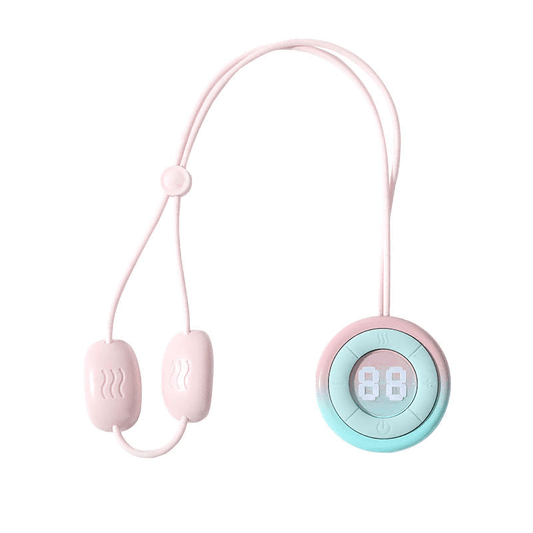
A compact electrical-pulse neck-contact format is built to sit directly against the skin on the back of the neck. Because it does not rely on mechanical motors, the housing remains extremely slim. This design is focused on maximum portability, offering a discreet, hands-free experience for users working in an office or commuting.
A U-shaped or soft-ring format wraps around the neck, providing a balance of structural support and functional housing. U-shaped designs often feature foldable structures for travel, while soft-ring formats offer a flexible, comfortable fit. These forms are highly practical for housing the gearboxes required for mechanical massage nodes without becoming overly burdensome to wear.
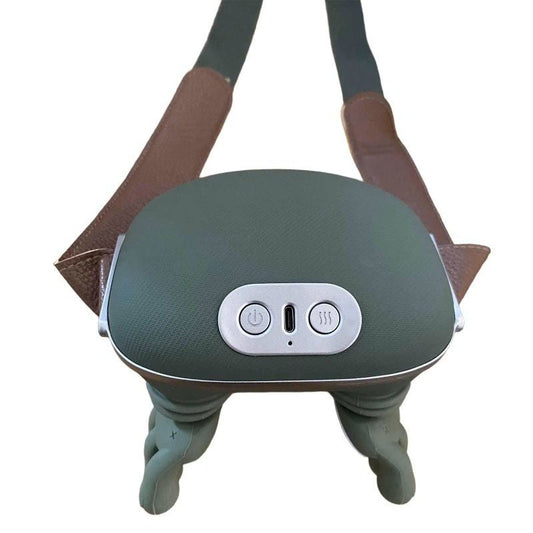
Broader neck-and-shoulder draping formats take a different approach by resting entirely over the shoulders. Given their larger footprint and reliance on multi-node rollers, these designs are built for stationary home use where broad coverage and deep mechanical pressure are the priorities.
Finally, adjacent wearable neck format rather than focusing on mechanical massage, these ergonomic structures are designed to sit comfortably around the neck to deliver specific thermal (heating/cooling) or light-based functions, catering to the beauty-tech or daily climate-comfort segments.
Kneading, Vibration, TENS, Heat and Light: What Each Technology Adds
A product's physical format limits which technologies it can effectively house. Understanding what each function actually does, and the sensation it provides, helps in selecting the right core technology for a specific product line.
- Kneading (Mechanical Rollers): Kneading utilizes motorized nodes that rotate in alternating directions. This technology physically manipulates the targeted area, simulating a squeezing and rolling motion. It provides substantial mechanical pressure but inherently requires a larger physical housing to accommodate moving parts, gearboxes, and motors.
- TENS (Electrical Pulse): Transcutaneous electrical nerve stimulation (TENS) bypasses mechanical movement entirely. Instead, it delivers low-frequency electrical pulses through conductive pads resting on the skin. The user experiences a tingling or light tapping stimulation. Because this technology requires minimal physical space, it serves as the foundation for ultra-compact wearable forms.
- Vibration: Vibration relies on small internal motors to create high-frequency, low-amplitude surface movement. While it does not provide the deep physical manipulation of kneading, it adds a layer of gentle sensory input and is often utilized in space-constrained designs where some physical movement is desired.
- Heat and Light (and Thermal Comfort): Heating elements provide a warm-compress sensation, acting as a selectable comfort function alongside the primary massage experience. Beyond simple warmth, active thermal control (including cooling modules) can be integrated into wearables for ambient climate comfort. Light can also function as a standalone module; in certain neck-care devices, selectable multi-wavelength light is integrated directly into the wearable as part of a targeted daily care routine.
Matching Product Formats to Different Market Positions
Selecting the right combination of format and technology is how a brand targets specific consumer segments when choosing between different neck massager formats.
Rather than viewing these features in isolation, brands should consider how they combine to define a product's ultimate position:
- A compact TENS device paired with heat naturally aligns with a low-bulk, travel-oriented product concept for users prioritizing portability.
- A U-shaped or soft-ring device with mechanical kneading bridges the gap between active physical massage and travel-friendly support.
- A broader neck-and-shoulder kneading device leans into stationary comfort, offering manual pressure control suited for home relaxation.
- Conversely, stripping away physical massage entirely in favor of active thermal control or multi-wavelength light shifts the positioning toward the adjacent beauty-tech or wearable climate-control markets.
How ECOZY’s Neck & Shoulder Range Covers Different Product Concepts
As an OEM manufacturer, ECOZY recognizes that a comprehensive product line cannot rely on a single feature set. Instead of offering repetitive devices, the ECOZY product range spans entirely different form factors, core functions, and use scenarios to support varying market positions.
| Product Direction | Representative Model | Core Technology | Format / User Experience | Product Positioning |
|---|---|---|---|---|
| Portable Mechanical Massage | HXR-E011 | Mechanical kneading + infrared heat | 180° foldable U-shaped design, rechargeable & wireless | Travel / Everyday use |
| Compact Wearable Massage | HXR-E012 | TENS (low-frequency pulse) + constant heat | 360° floating dual-head contact, lightweight | Office / Travel |
| Flexible Mechanical Comfort | HXR-E210 | Shiatsu (mechanical kneading) + heat | Soft-ring neck format, adjustable intensity | Neck & shoulder home/office use |
| Adjacent Thermal Wearable | HXR-E130 | Active heating + cooling | Wearable neck format, 3 fan-speed levels | Outdoor / Office / Travel climate comfort |
| Adjacent Beauty-Tech | HXR-E200 | Heat + selectable multi-wavelength light | Continuous C-shaped wearable | Daily neck-care / Beauty-tech |
Furthermore, models like the E130 and the E200 demonstrate how a neck-focused product line can naturally extend into adjacent categories. The E130 utilizes the neck-wearable format for active thermal heating and cooling, while the E200 Beauty Neck Instrument replaces mechanical massage entirely with heat and multi-wavelength light. This illustrates that the true commercial value of a product line comes from meaningful differentiation in format and function, rather than simply stacking every available feature into a single unit.
|
|
 |

From Product Selection to an OEM Project
Building a cohesive product line means determining which structural and functional combinations best fit your target audience. Whether the goal is to launch a compact electrical-pulse wearable for commuters or a flexible mechanical kneading device for the home office, the core technology must be carefully aligned with the product's physical positioning.
For teams establishing or expanding their neck massager categories, reviewing these product concepts is a practical first step. Contact us to discuss your target market and explore how our model-dependent OEM and ODM configurations can support your next product release.