






Does Cold Therapy Really Help Recovery? What the Research Shows
Cold therapy, or cryotherapy in its broadest sense, is the application of low temperatures to the body's tissues for therapeutic purposes. While historically used in clinical and sports settings, the mechanisms and outcomes of cooling tissue have been the subject of ongoing scientific investigation, revealing that its effects depend heavily on the specific modality, timing, and physiological targets.
Key Takeaways:
- Cold therapy includes different cooling modalities, and their effects should not be treated as identical.
- Short-term reduction in perceived DOMS (Delayed Onset Muscle Soreness) is one of the more consistently supported findings, particularly for Cold Water Immersion (CWI) under specific post-exercise protocols.
- Objective performance recovery is context-dependent and varies according to timing, exercise type, modality, and protocol.
- Acute recovery use and repeated cooling during long-term training should be evaluated separately.
What Is Cold Therapy?
Cold therapy is a broad category of physical intervention that involves extracting heat from the body to lower tissue temperature. It encompasses any method designed to cool the skin, underlying soft tissues, or the core body temperature. In the context of sports science and physical recovery, cold therapy is typically applied post-exercise with the intention of influencing the body's physiological response to physical exertion.
How Is Cold Therapy Applied?
There are several established methods for applying cold therapy, differing primarily in their cooling medium, coverage area, and temperature stability:
- Ice Packs and Gel Packs: A localized method using frozen or chilled materials applied directly to specific muscle groups or joints.
- Cold Water Immersion (CWI): Submerging the body (or parts of it) in a tub of chilled water, providing consistent circumferential cooling.
- Whole-Body Cryotherapy (WBC): Whole-body cryotherapy uses brief exposure to extremely cold air in a controlled chamber.
- Targeted Cooling Devices: Fluid-circulating pads or localized thermodynamic units that maintain a precise, constant temperature over a specific body part.

What Happens When Tissue Is Cooled?
The physiological response to cold application begins at the skin surface and extends to deeper tissues depending on the cooling duration and modality.
The primary immediate effects of cooling include a reduction in skin temperature and changes in sensory and motor nerve conduction velocity, which may produce a temporary hypoalgesic (pain-relieving) physiological effect [1]. Additionally, cold application leads to a reduction in local blood flow and localized metabolic demand [2]. These physiological shifts are the foundational mechanisms observed when tissue is cooled, though how they translate into functional recovery continues to be studied.
What Does Research Say About Cold Therapy After Exercise?
Research investigating the post-exercise effects of cold therapy distinguishes between subjective perceptions of recovery and objective physiological markers.
Muscle Soreness and Perceived Recovery
Cold therapy appears to have its clearest short-term evidence in perceived muscle soreness rather than across every measure of recovery. Systematic reviews and meta-analyses of randomized trials report lower DOMS pain during the first 24 hours when cooling is applied soon after exercise [3], [4].
However, in practical terms, feeling less sore after cooling does not necessarily mean that muscle function or overall physiology has fully recovered. While subjective soreness may decrease, objective measures such as the biochemical marker CK (Creatine Kinase) and CMJ (Countermovement Jump) performance often show no significant improvement under the same cooling protocols [4].
Strength and Athletic Performance
Objective performance recovery is highly context-dependent and varies with the type of exercise and the timeline of testing [5]. For example, while endurance recovery may benefit under certain short-term conditions, acute sprint or jump performance immediately following cooling might actually decrease. At later time points, such as 24 hours, jump and strength recovery can show positive results under certain conditions.
Furthermore, acute post-exercise recovery must be evaluated separately from repeated cooling. Repeated post-exercise cooling may not be desirable in every resistance-training context when long-term strength adaptation (such as muscle hypertrophy or maximum strength gains) is the primary goal [6].
Why Results Differ Between Studies
The term "cold therapy" represents a broad category of interventions rather than a single standardized protocol. Variables such as the specific cooling modality, temperature, duration, timing, and the type of exercise heavily influence the outcomes [7].
For instance, while studies utilizing cold-water immersion at 11–15°C have presented favorable recovery trends within specific data sets, these findings underscore that different protocols cannot be treated identically. The resulting evidence remains strictly context-dependent, meaning one protocol's result cannot automatically represent all cold therapy methods [7].
Local Cold Therapy vs. Whole-Body Cryotherapy vs. Cold Compression vs. Contrast Therapy
Understanding the distinctions between various thermal and mechanical interventions is essential for selecting the appropriate recovery protocol.
| Modality | Core Mechanism | Typical Application |
|---|---|---|
| Local Cold Therapy | Simple heat extraction to lower tissue temperature. | Ice packs or cold wraps applied to specific areas. |
| Whole-Body Cryotherapy | Brief exposure to sub-zero air/vapor temperatures. | Cryo chambers for whole-body exposure. |
| Cold Compression | Combining cooling with active pressure to manage tissue, typically utilizing specialized cold compression therapy systems. | Post-exertion recovery requiring both temperature and pressure control. |
| Contrast Therapy | Alternating heat and cold cycles, known as contrast therapy, to induce vascular changes. | Immersion in alternating warm and cold water baths. |
What to Consider When Evaluating a Cold Therapy Method or Device
For professionals and organizations evaluating recovery technology, several technical and operational variables must be considered:
- Cooling Method: Whether the device relies on ice, refrigeration compressors, or thermoelectric (Peltier) technology.
- Temperature Control: The ability to maintain a consistent, verifiable temperature throughout the entire session without the fluctuations typical of melting ice.
- Application Area: Whether the design targets specific joints, large muscle groups, or the whole body.
- Session Control: Programmable timers and safety controls that help limit unintended exposure.
- Product/Test Documentation: Availability of safety certifications and independent testing regarding temperature accuracy.
Cold Therapy in Modern Recovery Technology
The landscape of cold therapy often involves different delivery formats that move beyond static ice application, integrating controlled temperature with other physical modalities.
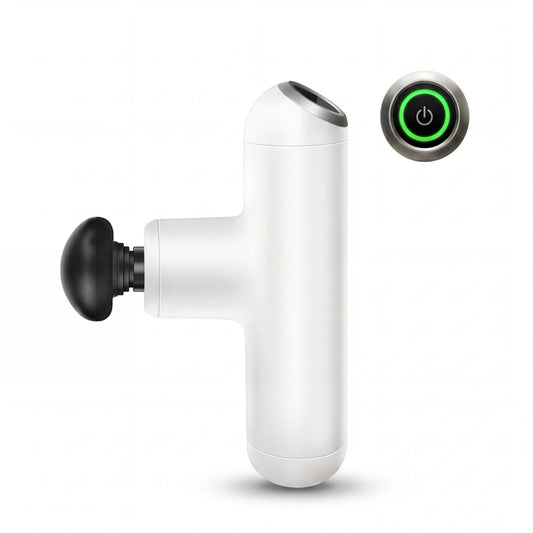
For example, systems like the ECOZY M010 CryoFlow Pro operate as a controlled thermal and pneumatic compression system, allowing for consistent temperature application alongside active pressure. Similarly, localized devices such as the B360 Hot And Cold Fascia Gun with Extended Handle combine percussive massage with an independently controlled cooling function to target specific areas.
For B2B buyers evaluating these technologies, practical considerations include temperature stability, application area, session management, and relevant product or test documentation. Evaluating these specifications ensures that any specialized equipment, such as professional cold therapy and hot therapy systems, appropriately aligns with the intended use case and controlled recovery protocols.
|
|
 |

Conclusion
Cold therapy encompasses a variety of modalities designed to lower tissue temperature, each triggering specific physiological responses such as reductions in skin temperature and localized nerve conduction adjustments. While research supports its association with short-term reductions in perceived muscle soreness, its effects on objective athletic performance remain highly dependent on the timing, temperature, and type of exercise. As recovery methods continue to evolve, understanding the specific context of these scientific findings remains crucial for effective application.
References
[1] Herrera, E., Sandoval, M. C., Camargo, D. M., & Salvini, T. F. (2010). Motor and sensory nerve conduction are affected differently by ice pack, ice massage, and cold water immersion.
[2] Malanga, G. A., Yan, N., & Stark, J. (2015). Mechanisms and efficacy of heat and cold therapies for musculoskeletal injury.
[3] Wang, Y., Li, S., Zhang, Y., Chen, Y., Yan, F., Han, L., & Ma, Y. (2021). Heat and cold therapy reduce pain in patients with delayed onset muscle soreness: A systematic review and meta-analysis of 32 randomized controlled trials.
[4] Ma, J., Guo, C., Luo, L., Chen, X., Zhang, K., Liang, D., & Zhang, D. (2025). Comparison of the Effects of Cold-Water Immersion Applied Alone and Combined Therapy on the Recovery of Muscle Fatigue After Exercise: A Systematic Review and Meta-Analysis.
[5] Choo, H. C., et al. (2022). Effects of cooling interventions on athletic performance and recovery outcomes.
[6] Chaillou, T., et al. (2022). Acute post-exercise recovery versus long-term resistance training adaptation with cooling therapies.
[7] Rousse, Y., Sautillet, B., Costalat, G., Brocherie, F., & Millet, G. P. (2025). Isolated and Combined Effects of Cold, Heat and Hypoxia Therapies on Muscle Recovery Following Exercise-Induced Muscle Damage.