






Red Light Therapy Tools: Comparing Wearable, Targeted, and Handheld Formats for Your Product Line
When wellness brands and product managers start sourcing red light therapy tools, they quickly notice that the category spans a wide variety of physical designs. Unlike traditional stationary light panels that require users to stand or sit still in front of a lamp, modern personal recovery hardware integrates red and infrared technology directly into body-contact devices—ranging from wrap-around lumbar belts and compact strap-on modules to contoured leg wraps and handheld massagers.
For B2B buyers building a recovery line, the most important product decision is rarely about chasing an abstract specification number on paper. Instead, commercial success comes down to matching the physical form factor to how your customers actually live and recover. A format that works effortlessly for an office worker seeking hands-free lower-back comfort during a video call is very different from the tool an athlete reaches for to work through tight calves and shoulders after training.
Key Takeaways
- Form Factor Shapes Daily Usage: Whether a device is worn hands-free around the waist, strapped over a specific joint, or held in the hand determines where, when, and how consistently customers use it.
- Full-Wrap Belts Anchor Core Recovery: Wide wearable belts (such as the HXR-L130 and HXR-L160) combine dual-wavelength 660 nm + 850 nm light with heat and vibration for broad, hands-free lumbar and abdominal coverage.
- Compact & Limb-Specific Wearables Expand Reach: Smaller strap-secured modules (HXR-A090) offer travel-ready spot placement, while contoured lower-limb wraps (HXR-N100) address leg-specific ergonomics.
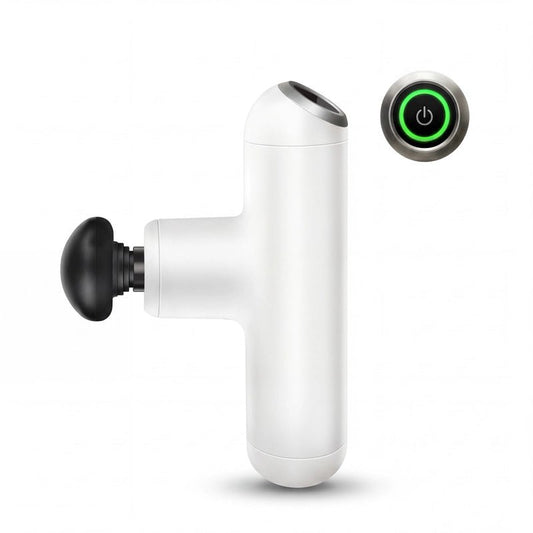
- Handheld Tools Deliver Multi-Area Versatility: Active handheld devices (HXR-B510) pair infrared light with 3D percussion and hot/cold therapy so users can treat multiple muscle groups in a single session.
Beyond Stationary Panels: What Defines Modern Body-Contact Light Tools?
In consumer wellness and sports recovery catalogs, body-contact light and infrared tools are designed to bring soothing comfort directly to the skin without tethering the user to a wall outlet. Rather than acting as single-function lamps, these devices typically combine optical or infrared elements with complementary physical modalities—such as adjustable heating, mechanical vibration, percussive massage, or active cooling.
When curating products for a brand portfolio, experienced buyers also pay close attention to how each model integrates light and thermal energy. While understanding the different optical wavelengths in red and near-infrared light therapy helps clarify how 660 nm visible red light and 850 nm near-infrared light work at the surface and deeper tissue levels, evaluating the hardware itself requires looking at two distinct implementation styles:
-
Dual-Spectrum Optical LED Arrays: Models that embed dedicated 660 nm visible red and 850 nm near-infrared LEDs alongside heating and vibration layers for true multi-modal light therapy.
-
Infrared Thermal & Multi-Modal Modules: Devices that focus on far-infrared warming or pair integrated infrared light with mechanical vibration and thermal contrast.
Once that technical baseline is clear, the real differentiation lies in the four physical formats below.
Four Real-World Device Formats in Personal Recovery Lines
Each physical enclosure solves a different ergonomic problem. Looking at how ECOZY engineers its recovery hardware illustrates how these four formats function in everyday use:
Wearable Wrap-Around Belts for Broad Lumbar and Core Coverage
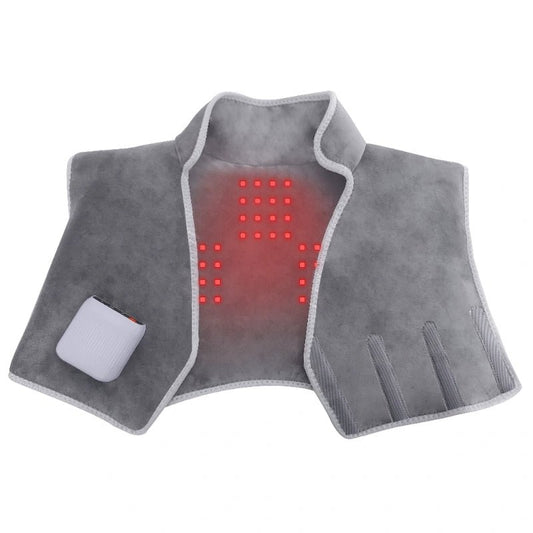
Wrap-around waist belts are often the flagship SKU in a brand's wearable recovery lineup. Built around a wide central pad with adjustable hook-and-loop side straps, a belt holds the LED matrix and heating zone flush against the lower back, waist, or abdomen.
The biggest user advantage is complete hands-free convenience. Once strapped on, the user can type at a desk, walk around the house, or unwind on the sofa while enjoying continuous coverage across a large muscle group. Within wearable lower back massagers, brands can position two distinct belt configurations depending on their target price tier:
- Hot Wave Massage Belt (HXR-L130): Engineered as a high-power, full-featured belt combining 660 nm visible red light and 850 nm near-infrared LEDs (across 4 light modes) with 4 infrared heating levels (44°C–55°C), 4 vibration speeds, and a high-capacity 11.1V 2400mAh cordless battery with an included extension strap.
- Red Light Hot Vibration Belt (HXR-L160): Built on a streamlined, lightweight patented wearable belt design that pairs 660 nm + 850 nm dual-wavelength light with 3 heat levels and 3 vibration modes powered by a compact 3.7V 2000mAh battery—ideal for effortless everyday operation and accessible retail positioning.
Compact Strap-Secured Wearables for Targeted Spot Placement
Full-width lumbar belts excel on the waist and lower back, but consumers also want a smaller, ultra-portable option they can pack in a carry-on bag or strap over tighter body zones like the shoulder, upper back, or lower abdomen.
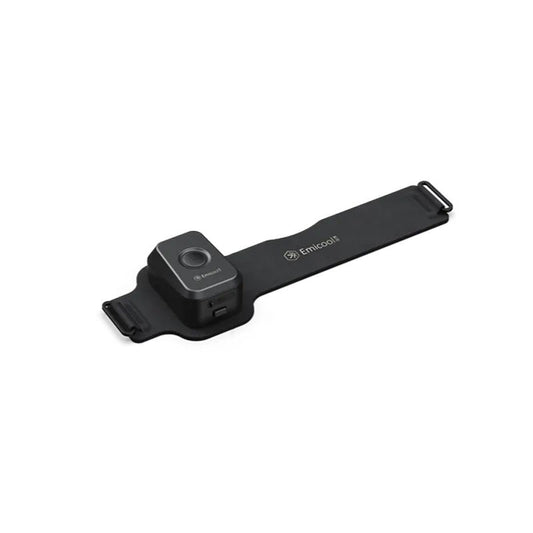
Compact localized wearables meet this need by housing the light, heat, and vibration module inside a sleek, palm-sized shell paired with an adjustable elastic fixing strap. Rather than relying on disposable sticky pads that lose adhesion over time, the Infrared Vibration Heat Patch (HXR-A090) is a durable, reusable hardware unit (~212g net weight, 3.7V 1900mAh rechargeable battery) that combines 3-level infrared/red-light therapy, 38°C–48°C adjustable heat, and 3 vibration intensities. For product managers, this format offers an attractive entry-to-mid-tier price point and effortless giftability.
Contoured Limb Wraps for Dedicated Leg and Calf Comfort
The lower limbs present a very different anatomical geometry from the waist. A flat lumbar belt cannot wrap smoothly around the tapered curve of the calf or leg without slipping downward during movement.
Dedicated limb wraps solve this with tailored multi-strap contouring and soft, flexible fabrics built specifically for lower-body retention. For example, the Infrared Hot Wave Leg Massager (HXR-N100) is a cordless, rechargeable leg wrap (11.1V 2400mAh battery) that combines 4 infrared-heating levels and 4 vibration intensities inside a skin-friendly elastic enclosure. While waist belts like the L130 and L160 focus on dual-spectrum 660 nm / 850 nm optical LED arrays for the core, the N100 illustrates how infrared thermal comfort and rhythmic vibration are adapted into a contoured wrap for users dealing with tired, heavy legs after long shifts or workouts.
Handheld Integrated Tools for Dynamic, Multi-Area Recovery
Not every user wants to strap on a wearable and keep it in one spot for 15 minutes. Active users, gym-goers, and sports recovery enthusiasts often prefer a single tool they can sweep across multiple muscle groups—moving from neck and shoulders to quads, hamstrings, and calves—in one sitting.
Handheld integrated tools trade hands-free wearability for total placement freedom and stronger mechanical impact. The Cold & Hot 3D High-Frequency Vibration Device (HXR-B510) showcases how multi-modal engineering elevates the handheld format: powered by a 7.4V 2200mAh battery (15W), it integrates high-frequency 3D percussion/vibration, 3-level heat compress, 3-level cold compress, and infrared light therapy in one ergonomic grip. Users can apply cold therapy to calm post-exercise tightness, switch to warmth and infrared light for soothing relaxation, and direct 3D vibration wherever tension builds.
Side-by-Side Comparison: How Format Changes the User Experience
To help sourcing and product teams compare these four architectures at a glance, the table below summarizes how each format performs across practical user and commercial dimensions:
|
Device Format |
Representative ECOZY Model |
Target Body Area |
Hands-Free or Active Use? |
Coverage Style |
Verified Modality Combination |
Ideal B2B Portfolio Role |
|---|---|---|---|---|---|---|
|
Wearable Wrap-Around Belt |
Lower back, lumbar spine, waist, abdomen |
Hands-Free (wrap-around Velcro belt + extension strap) |
Broad, continuous core contact |
660 nm + 850 nm LEDs + Adjustable Heat (3–4 levels) + Vibration (3–4 speeds) |
Core Flagship / Hero Wearable for daily home and office lumbar care |
|
|
Compact Localized Wearable |
Waist, abdomen, back, shoulders |
Hands-Free (adjustable elastic fixing strap) |
Focused, localized spot coverage |
3-level infrared/red light + Adjustable Heat (38°C–48°C) + 3-level Vibration |
Portable / Entry-to-Mid SKU for travel and targeted multi-spot relief |
|
|
Contoured Limb Wrap |
Legs and calves |
Hands-Free (contoured lower-limb wrap) |
Wrap-around lower-limb contact |
4-level infrared heating + 4-level Vibration massage |
Specialized Lower-Body SKU for runners, standing workers, and leg care |
|
|
Handheld Integrated Tool |
Whole-body muscle groups (shoulders, back, legs, arms) |
Active Handheld (manually positioned by user) |
Dynamic, movable point of contact |
Infrared light + 3D High-Frequency Vibration + 3-level Heat + 3-level Cold |
Multi-Modal Sports & Active Recovery Tool for targeted full-body percussion |
Four Practical Differences That Matter to End Users
- Broad Passive Soothing vs. Precision Targeting: A full waist belt covers the entire lumbar region at once without requiring the user to aim or move the device. A handheld tool covers a smaller contact footprint at any given second, but lets the user trace along specific muscle lines and knots at will.
- Multitasking Convenience vs. Dedicated Recovery Sessions: Cordless belts (HXR-L130, HXR-L160), strap-on patches (HXR-A090), and leg wraps (HXR-N100) blend seamlessly into daily routines—users can wear them while working, reading, or doing light chores. Handheld tools (HXR-B510) require an active grip, making them better suited for focused 10- to 15-minute post-workout recovery windows.
- Ergonomic Retention and Sizing: On wearable formats, customer satisfaction hinges on strap elasticity, breathable skin-friendly linings, and extension straps that accommodate varied body types. On handheld devices, handle balance, weight distribution, and intuitive thumb controls take center stage.
- Complementary Modality Pairing: Because wearable belts maintain prolonged stationary contact against the skin, they are the natural home for wide dual-wavelength LED matrices paired with steady warmth. Handheld tools, by contrast, shine when pairing infrared light with instant thermal contrast (hot and cold therapy) and deeper mechanical percussion.
How B2B Buyers Can Select the Right Format Mix for Their Brand
Rather than trying to find one single device to serve every customer, successful wellness brands structure their product lines around clear user personas and price tiers:
- Start with Your Core Customer Persona: If your audience consists primarily of desk workers, commuters, and everyday home-wellness shoppers, a hands-free wearable belt like the HXR-L160 or HXR-L130 delivers immediate mass-market appeal. If your brand caters to gym-goers, runners, and physical therapy channels, pairing a handheld hot/cold percussion tool like the HXR-B510 with the HXR-N100 Leg Massager creates a cohesive athletic recovery kit.
- Build a Good-Better-Best Price Ladder: You can easily avoid internal catalog cannibalization by tiering formats by size and power. For instance, position the compact HXR-A090 Patch as an accessible entry-level portable gift, the 3-level HXR-L160 Belt as your mainstream volume driver, and the high-power 11.1V HXR-L130 Belt as your premium flagship wrap.
- Verify Portable Power and Compliance Early: Because cordless convenience is a major selling point across all four formats, check battery capacity, charging interface, and auto-shutoff timers during sample evaluation, and ensure your chosen models carry full compliance documentation (such as CE, UKCA, RoHS, REACH, and FCC) for your target regions.
Build Your Red Light & Recovery Line with ECOZY
Choosing the right red light therapy tools starts with understanding how physical form factor transforms the user experience—from broad, hands-free lumbar belts and portable localized patches to contoured leg wraps and dynamic hot/cold handheld massagers. When each product in your catalog has a clear ergonomic role, your brand can serve more recovery scenarios and capture higher customer lifetime value.
As an experienced R&D and source manufacturer in personal massage and wellness hardware, ECOZY offers a complete portfolio of market-ready platforms inside our Red Light Therapy Devices collection. Backed by in-house industrial design, precision tooling, a 6-step quality control system, and comprehensive international certifications, we support global brands through flexible OEM and ODM customization services—ranging from custom brand colorways, fabric selections, and logo silk-screening to bespoke retail packaging and tailored functional presets.
Ready to evaluate samples or plan your next recovery product launch? Feel free to contact the ECOZY B2B team today to request detailed specification sheets, pricing tiers, and customization options for your brand.